Today we want to consider that which is the other side, the other extreme of faith. Originally, experience, to put it simplistically, was the hallmark of Liberal Protestant Christianity and theology. It was seen as the means of understanding Christianity's relevancy in a 'modern' world where miracles and the supernatural were rejected outright as violations of the closed system of nature and rationale thought. If the very and most mysterious tenets of the faith were to be discarded, experience became the very essence of faith in Jesus Christ.
In our own modern/post-modern world, experience does not necessarily mean the same thing, or function for the individual believer in the same manner. No, instead, experience has to do with transcending the transcendent - that is, it is a manner of "feeling" something in the midst of worship, prayer, or anything else that can come under the label of "Christian". Today experience is an important hallmark for many self-proclaimed 'emergent' churches and Christians, as a subtle (or not so subtle) way of diminishing the importance of doctrine, while at the same time, supposedly uplifting the centrality of the dynamic of relationship between humanity and God.And this is the very problem of this second extreme. It is enslaved to a set sense of feelings; and it holds true faith captive to the expectation of those feelings being continually experienced in an ongoing manner. For those feelings not to be experienced, whether in the context of worship or any other "Christian" activity, is to invalidate the power or validity of an event which in truth is subject purely to God's sovereign act.
This approach to faith, too, sets up a false dichotomy that pits the intellect against experience. This particular extreme puts God as the object of our determinations, and the individual as the subject who determines what is real, what is valid via their own 'experience'. Humanity becomes the real authority on what is real. Individuals become the arbiter of truth as it transcends their emotions and feelings. This becomes. then, an Ebionitic Christ, being driven by the flesh, rather than the Spirit of God. Experience, a repetition of these all-important "religious" feelings, becomes the god that is worshipped, not the Triune God of grace, revealed in Jesus Christ. Our faith must be rooted in trusting in the both the veracity of Scripture's testimony of who Jesus is, and what He has done, and that He is as good as the Scriptures tell us He is (that is, the love of God in Jesus Christ for humanity). Only a faith that transcends any "feelings" is a faith that is in Jesus Christ as Savior and Lord.
Friday, May 18, 2007


Thursday, May 17, 2007
Faith - ii - the 'Intellectual' appraoch
This entry will focus on the first of our "extreme" forms of faith, namely, the 'intellectual' approach to faith. Simply put, there is an overemphasis on that angle on our faith in which our faith is guaged by what, or how much, we "know". Too much weight is given to orthodoxy. Pure, correct doctrine is the goal, and any one who lines up properly to all the correct doctrinal categories is viewed as a true believer.The overarching problem is that is part of a false dichotomy (more on the other part in the next entry).
It is deceptive in that the pursuit of the 'intellectual' can turn Christianity away from a relationship with the Almighty Triune God of grace, and into an exercise of the mind. It tends to be the problem of the conservative branch of the Church, and looks down on those who don't emphasize this same knowledge of God and of Scripture. The 'intellectual' faith seems to be more concerned with the ins and outs of theology than making sure that good theology is being lived out in every area of the believer's life. This intellectualism turns the faith into a set of propositions to be agreed upon. The 'living' out of one's faith is either assumed, or just plain ignored.
In the end, this approach can lead to a docetic Christianity, where our salvation seems determined by how much we understand of the Gospel. In order to combat this extreme, we must realize that our faith is not just about saving the mind, but the whole person. Through a relationship with the LORD we are saved, by grace, so that we may not be able to boast. Our salvation is for our bodies, our minds, and our spirits. Our salvation is alot more than just mere intellectual assent.
It is deceptive in that the pursuit of the 'intellectual' can turn Christianity away from a relationship with the Almighty Triune God of grace, and into an exercise of the mind. It tends to be the problem of the conservative branch of the Church, and looks down on those who don't emphasize this same knowledge of God and of Scripture. The 'intellectual' faith seems to be more concerned with the ins and outs of theology than making sure that good theology is being lived out in every area of the believer's life. This intellectualism turns the faith into a set of propositions to be agreed upon. The 'living' out of one's faith is either assumed, or just plain ignored.
In the end, this approach can lead to a docetic Christianity, where our salvation seems determined by how much we understand of the Gospel. In order to combat this extreme, we must realize that our faith is not just about saving the mind, but the whole person. Through a relationship with the LORD we are saved, by grace, so that we may not be able to boast. Our salvation is for our bodies, our minds, and our spirits. Our salvation is alot more than just mere intellectual assent.
Wednesday, May 16, 2007
Faith - i - a short intro
Christians, whether we realize it or not, have a tendency toward extremes. And why not? We are human, in spite of accusations to the contrary by our detractors. We are human, and simply put, we like black and white categories.
So it is with faith. We see these two extremes most easily identified as the 'intellectual', or the 'experiential'. I'd like to address these extremes from the perspective that they are not at all what we should strive for, let alone recognize as true faith. In the following three short (I hope) essays, I will share what I think is a biblically recognizable understanding of what faith really is, and why each of these extremes does not fit the definition of true faith. You of course, are welcome (AND ENCOURAGED) to share your thoughts.
May God bless us all on this leg of our journey!
So it is with faith. We see these two extremes most easily identified as the 'intellectual', or the 'experiential'. I'd like to address these extremes from the perspective that they are not at all what we should strive for, let alone recognize as true faith. In the following three short (I hope) essays, I will share what I think is a biblically recognizable understanding of what faith really is, and why each of these extremes does not fit the definition of true faith. You of course, are welcome (AND ENCOURAGED) to share your thoughts.
May God bless us all on this leg of our journey!
Tuesday, May 15, 2007
where has the time gone?
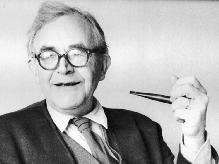
The last several weeks have been filled with an incredible amount of reading and writing, culminating in the completion of a 5 week Wednesday night course I taught at Narberth Pres. on The historical development of Christology called 'Who Do You Say I am?'; a ten-page paper critiquing Walter Brueggemann's use of 'Counter-Testimony' in his Theology of the Old Testament; a thirty-eight and one-half page exegetical analysis of Matthew 16:13-20; and just off the presses and turned in today, a fifteen page overview of Karl Barth's Christology, or his Christocentric approach to theology. And now I wonder, where has the time gone?
To say the least, my brain is feeling somewhat mushy, and it is my deepest hope that I actually may remember much of what I've learned. But one of the things I did learn this past April is that after four years part-time and one full year of studies, I am poised to finish my Masters in Theological Studies in Contemporary Theology at the end of the 07 Fall semester. All I have before me is Biblical Hebrew (this Summer), and in the Fall, writing two theses. I'm very excited, but also quite nervous, I don't mind admitting. Not only do I need to consider what I will be writing my theses on - and who will be my readers - but I must also start looking at and considering doctoral programs, as well as prep for GREs in the Fall. And again, I wonder, where has the time gone?
I hope you're still visiting, dear reader, dear friend. I'm sorry that I've not "written" in so long, at least in this context. But I hope that you are experiencing the fullness of God, and living out His holy and perfect will. Drop me a line, and let me know how you are doing.
God bless!
To say the least, my brain is feeling somewhat mushy, and it is my deepest hope that I actually may remember much of what I've learned. But one of the things I did learn this past April is that after four years part-time and one full year of studies, I am poised to finish my Masters in Theological Studies in Contemporary Theology at the end of the 07 Fall semester. All I have before me is Biblical Hebrew (this Summer), and in the Fall, writing two theses. I'm very excited, but also quite nervous, I don't mind admitting. Not only do I need to consider what I will be writing my theses on - and who will be my readers - but I must also start looking at and considering doctoral programs, as well as prep for GREs in the Fall. And again, I wonder, where has the time gone?
I hope you're still visiting, dear reader, dear friend. I'm sorry that I've not "written" in so long, at least in this context. But I hope that you are experiencing the fullness of God, and living out His holy and perfect will. Drop me a line, and let me know how you are doing.
God bless!
Wednesday, March 21, 2007
a sermon on evil and suffering
This Spring 07, I'm taking a class called 'Persevering Hope: The Theology of Evil, Suffering, and the Goodness of God. The first major assignment for this class is due next week. From the title of this entry, you've probably guessed that it's a sermon we had to prepare. Because there's some twenty people in the class, we don't have time to deliver these sermons to the class, as was the original intent. But we had to write a sermon with a particular tragedy that had effected our specific congregation at some point in recent memory.
I was challenged to come up with something; that is, I was challenged to come up with something other than the only real, true evil event that I could recall from my time at my church: the murder/suicide of a divorced couple who had both been members of our congregation. I really didn't want to write a sermon on this. But nothing else came to mind. I didn't want to write it because I realize that deep down, I'm still deeply saddened about it, and I didn't want to go back and revisit that hurt and pain. I also didn't want write on it because I didn't know what I could possibly say, even what I could find within Scripture that could possibly come across as anything but trite.
But I wrote it. Just finished it and printed it out earlier in the hour. I don't know about it. I'll have my wife read it over, and get her input. It might do it. It might not. I don't know. But I do know that if there's anything good about it, anything worthy to it, I give God the glory. As I was writing, wondering what points am I going to be able to make, the Lord led me to John 11, and three points within the story of Lazarus. Praise God for anything good and worthy in it.
If you're at all interested in reading it, drop me a line with your email, and I'll be happy to share it with you. That is, if it floats.
Coram Deo.
I was challenged to come up with something; that is, I was challenged to come up with something other than the only real, true evil event that I could recall from my time at my church: the murder/suicide of a divorced couple who had both been members of our congregation. I really didn't want to write a sermon on this. But nothing else came to mind. I didn't want to write it because I realize that deep down, I'm still deeply saddened about it, and I didn't want to go back and revisit that hurt and pain. I also didn't want write on it because I didn't know what I could possibly say, even what I could find within Scripture that could possibly come across as anything but trite.
But I wrote it. Just finished it and printed it out earlier in the hour. I don't know about it. I'll have my wife read it over, and get her input. It might do it. It might not. I don't know. But I do know that if there's anything good about it, anything worthy to it, I give God the glory. As I was writing, wondering what points am I going to be able to make, the Lord led me to John 11, and three points within the story of Lazarus. Praise God for anything good and worthy in it.
If you're at all interested in reading it, drop me a line with your email, and I'll be happy to share it with you. That is, if it floats.
Coram Deo.
Subscribe to:
Posts (Atom)